
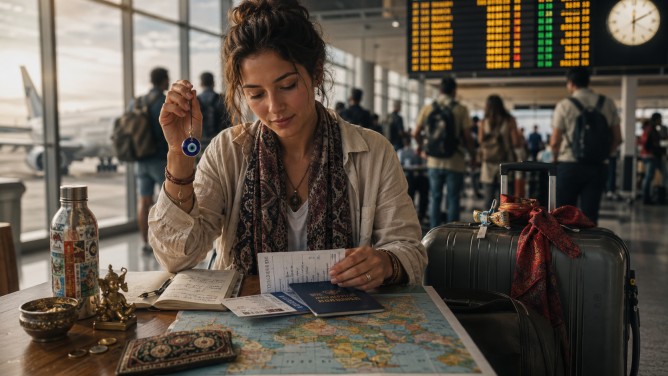
Embarking on a journey often involves more than just packing bags and booking tickets. Across the globe, travelers adhere to various superstitions and rituals believed to usher in good luck and protection on their travels. These practices, deeply rooted in cultural traditions, add a unique touch to the travel experience. Here’s a closer look at some intriguing travel superstitions from different parts of the world.
In the Balkans, the tradition of carrying a clove of garlic in one’s luggage is a common practice. Garlic is thought to ward off negative energy and the evil eye, acting as a talisman against bad luck throughout the journey. Similarly, some travelers have adopted the practice of touching the aircraft’s exterior before boarding. This gesture is considered a way to invite good fortune and offers comfort, especially to those who are anxious about flying. Another airplane-related superstition involves stepping onto the aircraft with the right foot first, which is believed to symbolize starting the journey positively.
Water plays a symbolic role in travel superstitions in parts of the Middle East and the Balkans. Families often pour or sprinkle water behind a traveler as they depart, with the flowing water representing a smooth and safe trip and the hope of a safe return. Numbers, too, carry significant weight in travel beliefs. While the number 13 is often avoided in Western cultures for its association with bad luck, in China, the number 4 is similarly shunned due to its phonetic similarity to the word for death. In Italy, the number 17 is traditionally seen as unlucky. These numerical superstitions can influence various aspects of travel, from hotel room numbers to the floors of buildings.
Other customs include sitting on packed luggage before leaving, a practice rooted in Slavic traditions. This brief pause gives travelers a moment to gather their thoughts and mentally prepare for the journey ahead. Additionally, in some cultures, sweeping the floor immediately after a traveler departs is considered unlucky. The belief is that it could sweep away the traveler’s good fortune or hinder their safe return. While these superstitions lack scientific evidence, they remain an integral part of travel culture, cherished for preserving family traditions and cultural identity and enhancing the excitement of embarking on new adventures.