
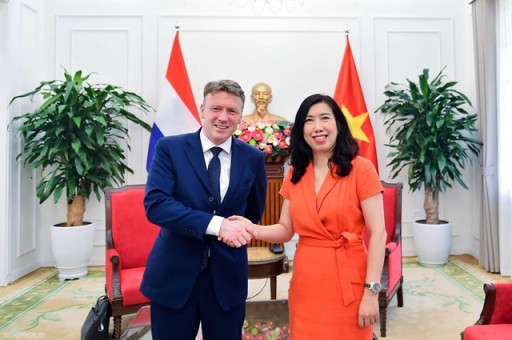
Vietnam and the Netherlands recently conducted their second high-level political consultation in Hanoi, where both nations reiterated their dedication to broadening collaboration across various sectors. This meeting was led by Vietnamese Deputy Foreign Minister Lê Thị Thu Hằng and Dutch Deputy Foreign Minister Marcel de Vink. The discussions reflected on the progress made in bilateral relations and expressed optimism about the continued growth in areas such as diplomatic exchanges, economic collaboration, and involvement in regional and international forums.
The dialogue emphasized Vietnam’s ambitious goals to transform into an upper-middle-income country by 2030 and attain the status of a developed, high-income nation by 2045. To reach these milestones, Vietnam plans to prioritize science, technology, innovation, and digital transformation as the primary catalysts for sustainable economic growth. The Vietnamese representatives advocated for the deepening of the Comprehensive Partnership and existing strategic cooperation frameworks between the two countries. They also sought enhanced collaboration in fields such as trade, investment, sustainable agriculture, climate adaptation, green transition, digital innovation, and technological advancements.
Additionally, Vietnam pressed for support regarding the ratification of the EU–Vietnam Investment Protection Agreement and called for the removal of trade barriers affecting seafood exports. The Netherlands, acknowledging Vietnam as a vital and reliable partner in the Asia-Pacific region, reaffirmed its commitment to strengthening ties. Dutch officials showed interest in deploying larger business delegations to Vietnam and expanding cooperation in high-tech industries, including semiconductors, artificial intelligence, scientific research, and workforce development.
Both nations agreed to bolster cooperation in security, defense, justice, culture, tourism, and fostering people-to-people connections. They also encouraged closer collaboration between local governments and businesses. On the international front, the two countries reiterated their support for multilateralism, free trade, and the peaceful settlement of disputes in line with international law. They underscored the significance of maintaining peace, stability, and freedom of navigation and overflight, particularly within the framework of the 1982 United Nations Convention on the Law of the Sea.