
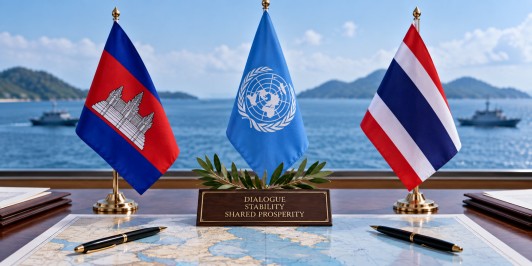
Cambodia and Thailand have embarked on a United Nations-supported effort to resolve their protracted maritime boundary dispute in the Gulf of Thailand. This initiative, conducted under the United Nations Convention on the Law of the Sea (UNCLOS), saw the foreign ministers of the two countries deliver opening statements during the inaugural meeting. The central issue is Cambodia’s push for a single maritime boundary agreement with Thailand. In a bid to reach a mutually beneficial outcome, Phnom Penh has alternatively suggested a joint development arrangement to facilitate shared access to resources in the contested zone.
The waters at the heart of the dispute cover approximately 26,000 square kilometers and are believed to hold substantial reserves of oil and natural gas, adding significant economic stakes to the resolution of the disagreement. Despite past efforts to resolve the issue, tensions have persisted for over 25 years. In 2001, both nations reached an agreement to jointly develop the disputed resources, but this arrangement was dissolved by Thailand in May following a series of deadly border clashes.
Thailand has stated that the current proceedings should remain focused solely on the delimitation of the maritime boundary. Bangkok has committed to participating in the conciliation process in good faith, despite having previously advocated for direct negotiations as a means of resolving the conflict. The process was initiated by Cambodia in June, invoking the compulsory conciliation mechanism under UNCLOS.
An independent panel is overseeing the conciliation, tasked with issuing recommendations to both parties. However, it is essential to note that these recommendations are not legally binding, leaving the ultimate resolution dependent on further diplomatic engagement between the two nations. The outcome of this process could significantly influence the geopolitical and economic landscape of the region, contingent on how Cambodia and Thailand choose to implement the panel’s findings.