
Việt Nam is aiming higher, with the Politburo setting ambitious goals for its economic development. Through resolutions issued last year and this year, the country plans to transform its enterprise landscape by 2030. One of the main targets is to have at least 2 million active enterprises, including 20 large corporations participating in global value chains. Additionally, the Politburo aims for 50 state-owned enterprises to be among Southeast Asia’s top 500 companies, and between one and three to be ranked globally in the top 500. This initiative is part of a broader strategy to establish competitive corporations on the international stage.
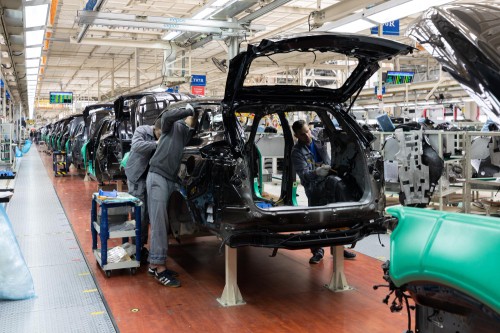
Over the past 40 years, since the Đổi mới reforms, Việt Nam has seen the rise of significant economic groups across various sectors. Companies like THACO have developed large-scale manufacturing ecosystems, while VinFast has gained international recognition as the country’s first electric vehicle manufacturer. VinFast’s operations extend beyond domestic markets, with a listing on the Nasdaq and sales in North America, Europe, and Southeast Asia. Similarly, Hòa Phát Group has become a major player in the steel industry, competing with international firms, and FPT has established itself as a leading IT company in the region.
Despite these successes, experts like Đậu Anh Tuấn of the Vietnam Chamber of Commerce and Industry caution that while the business sector is large, it still lacks depth and capacity. Many enterprises remain reliant on capital without transitioning to modern industrial practices. To achieve the vision of becoming a modern industrialized nation by 2045, Việt Nam needs to cultivate economic groups that are not only resilient to global economic changes but also capable of leading the economy. This will require a shift from broad-based support to targeted policies that foster growth among potential industry leaders.
Economist Trần Đình Thiên emphasizes the importance of mastering technology and selecting strategic industries for development. Drawing from international examples, such as Japan’s strategic industry investments and South Korea’s development of conglomerates like Samsung and Hyundai, Việt Nam is advised to adopt a focused and calculated approach. With a supportive policy framework already in place through Resolutions 68 and 79, the challenge remains in execution and maintaining consistency. If navigated successfully, this could lead to the emergence of Vietnamese economic groups with a significant regional presence and a firm foothold in global value chains.
The potential for Việt Nam’s economic rise is evident, but it hinges on effective implementation of these policies. The coming decade holds the promise of transforming the nation’s economic landscape, enabling it to compete on a global scale and realize its aspirations of becoming an economic powerhouse.