
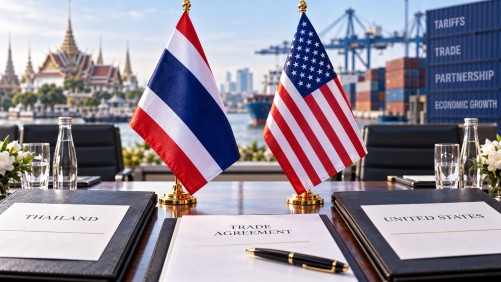
Thailand is pushing forward with negotiations on a reciprocal trade agreement with the United States, aiming to shield its exporters from the possibility of increased tariffs. This move comes amidst ongoing discussions over longstanding trade issues between the two nations.
The Agreement on Reciprocal Trade (ART) is currently under negotiation, with Thai officials expressing that there is no set timeline for its completion. However, the stakes are high for Thailand, which is presently subject to a 12.5% tariff imposed by the U.S. under Section 301 due to concerns over imports produced through forced labor. Further complicating matters, the U.S. has initiated an investigation into excess production capacity, potentially leading to additional duties on Thai exports.
Thai authorities have responded by submitting data to contest these U.S. concerns, asserting that the production capacity in several of their key industries is higher than previously assessed by American agencies. They hope to update the U.S. perspective to reflect this new information.
In pursuit of a more favorable tariff treatment, Thailand seeks conditions similar to those enjoyed by regional competitors like Malaysia and Indonesia. The potential ART is viewed as a means to enhance market access and provide more certainty for Thai exporters, although the final terms are still under negotiation.
Beyond tariffs, the proposed trade agreement aims to address U.S. concerns over trade barriers, investment, and market access within Thailand. Any finalized deal would need to undergo Thailand’s domestic approval processes before being enacted, signifying a multifaceted approach to strengthening economic ties.