
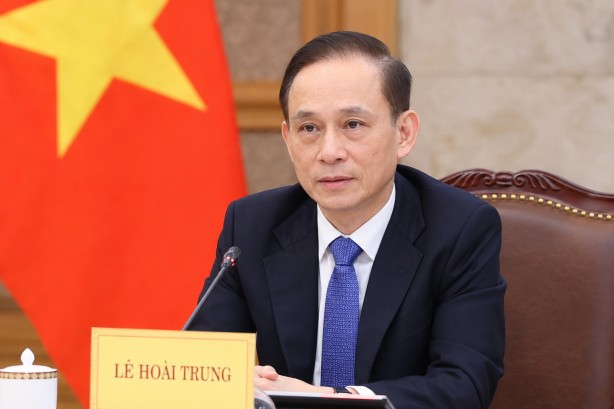
Vietnam has urged for enhanced collaboration between the Association of Southeast Asian Nations (ASEAN) and the United States in critical sectors such as trade, artificial intelligence, digital technology, and energy transition. This call was made during the ASEAN Post-Ministerial Conference with the US in Manila, where significant discussions took place.
Vietnamese Foreign Minister Lê Hoài Trung expressed appreciation for the US commitment to maintaining peace, stability, and development within the region. He emphasized the need for both parties to swiftly finalize a comprehensive new work program. Trung proposed that cooperation be expanded in essential areas, including trade and investment, the digital economy, semiconductors, science, technology, and energy transition, along with regional energy connectivity. He also highlighted the importance of continued US support for the Mekong sub-region, particularly in water management, climate change adaptation, infrastructure development, and workforce training.
On the topic of regional security, Trung stressed the significance of maintaining peace and resolving disputes through dialogue and adherence to international law. He acknowledged the ongoing US support for ASEAN’s stance on the South China Sea and encouraged Washington to assist in fortifying an open, inclusive, and rules-based regional order centered around ASEAN.
Addressing global issues, Trung called for increased dialogue regarding Middle Eastern developments and emphasized the need to maintain safe maritime routes through the Strait of Hormuz, underscoring the protection of freedom of navigation under international law. These remarks were echoed by US Secretary of State Marco Rubio, who affirmed Washington’s support for ASEAN. He highlighted Southeast Asia’s strategic and economic importance and pledged continued US investment in supply chains, the digital economy, energy security, power-grid connectivity, and civil nuclear cooperation.
The discussions concluded with ASEAN and the United States agreeing to strengthen economic ties, expand cooperation in high-value industries, and enhance people-to-people exchanges. They also committed to improving coordination in addressing challenges such as terrorism, cybercrime, human trafficking, drug trafficking, and online scams. This collaboration aims to deepen economic integration and foster stability in the region.