
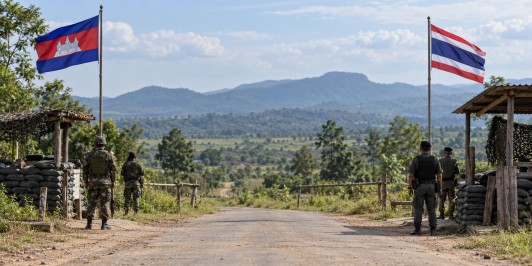
Cambodia has rejected the notion that its ceasefire agreement with Thailand could be used to redefine their international border or determine legal ownership of contested areas. Cambodian Information Minister Neth Pheaktra clarified that while the ceasefire, which began on December 27, calls for both nations to maintain existing military positions, it does not influence the final determination of borders.
The ceasefire was agreed upon in December to facilitate the safe return of civilians displaced by earlier conflicts. According to Cambodian officials, more than 20,000 people were forced to leave their homes during the military engagements. Pheaktra emphasized that ensuring the safe return of these civilians is a crucial indicator of the agreement’s success.
Cambodia has accused Thai forces of bolstering their positions in disputed areas by installing barbed wire, digging trenches, and constructing roads and military facilities. Pheaktra warned that these activities could alter the status quo rather than simply maintaining current positions as agreed.
Meanwhile, Thailand has involved foreign delegates, ASEAN observers, and international journalists by showing them around areas near the border, such as the O’Smach casino area and Choam crossing. Here, Thailand presented claims related to the use of casino buildings and alleged cross-border criminal activities. Cambodia disputes Thailand’s control over these areas, insisting that the territory remains under Cambodian jurisdiction.